Hillside sprinkler and yard lines
Irrigation Leak Water Damage in La Mesa, CA
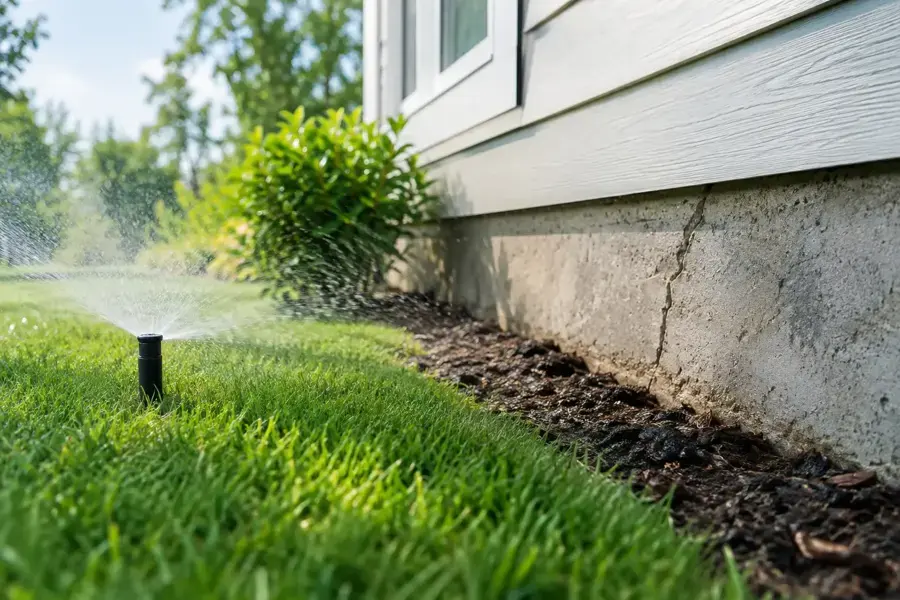
On a sloped La Mesa lot, a cracked sprinkler line or a head aimed at the house sends water straight into the uphill wall. The restoration team dries the wall base, the slab edge and anything the water reached inside.
(888) 450-9281Water still spreading? Call La Mesa now.- 24/7 dispatch
- Daily moisture readings
- IICRC S500 drying standard
First steps
What to do first when irrigation water gets into a La Mesa home
- Turn off the irrigation controller and the backflow valve.
- Look for a soaked planter bed, a geyser or a head spraying the wall.
- Move furniture and boxes away from the wet interior wall.
- Photograph the outside source and the inside damage.
- Call the restoration team to map the wet wall and floor.
The trade facts that apply
- Irrigation water that enters through the ground often carries soil, so it is treated as Category 2 or higher.
- Water pushed against a wall from outside soaks the bottom plate and the slab edge first.
- Stucco and drywall can look dry while the framing behind them stays wet.
- Drying stops being effective if the outside source keeps running, so the source gets fixed first.
Call before the water reaches the subfloor: (888) 450-9281
How the work is handled
How irrigation leak water damage is handled in La Mesa, CA
- 1
Find the path
The tech who does the walkthrough traces where irrigation water met the wall and maps how far it spread inside.
- 2
Extract and remove
The extraction crew clears water, and the mitigation team pulls wet baseboard, pad and any drywall that took dirty water.
- 3
Dry the wall base
Air movers aim at the wall bottoms and LGR dehumidifiers pull moisture out of the room and the slab edge.
- 4
Verify and record
Readings are logged daily until the framing and slab meet the drying goal.
Typical cost
What does irrigation leak water damage cost in La Mesa, CA?
In La Mesa, CA, irrigation leak water damage restoration typically runs $800 to $4,500, depending on the water category, the length of wall affected, the material class and how long the leak ran before anyone noticed.
One wall, caught early
$800 to $1,800
- Baseboards removed
- Wall base drying
- Air movers and dehumidifier
Room-wide seepage
$1,800 to $3,500
- Carpet pad removed
- Lower drywall cut
- Slab edge drying
Garage or multi-room
$3,500 to $6,000+
- Several rooms
- Soil-laden water cleanup
- Antimicrobial applied
These are typical ranges, not a quote. Try the water damage cost calculator for a planning number.
Why sloped lots push water into homes
La Mesa earned the name Jewel of the Hills, and many homes sit on lots cut into slopes around Mount Nebo, Windsor Hills and Mount Helix. Irrigation runs uphill of the house, planter beds sit against the stucco, and gravity does the rest. A cracked lateral line or a sprinkler head knocked sideways can run every night for weeks.
Because the controller runs early in the morning, the leak often goes unnoticed until a baseboard swells, carpet feels damp along one wall, or a musty smell shows up in a back bedroom.
Inside damage from an outside source
Water that comes through soil and stucco is not clean supply water. The mitigation team treats it as Category 2 at minimum, so pad and any soaked drywall usually come out, and an EPA-registered antimicrobial goes on the cleaned surfaces. The framing and slab edge are then dried in place.
- Check planters against the house for soggy soil.
- Look for efflorescence or dark lines low on the stucco.
- Watch for rising water bills in warm months.
Fix the source, then dry
Drying equipment cannot win while the sprinklers keep watering the wall, so the irrigation repair comes first. The EPA WaterSense program has tips on checking sprinkler systems for leaks, and San Diego Public Utilities posts regional water-use information. Water that also came through the slab is covered on the slab leak page.
Service area
Irrigation Leak Water Damage across La Mesa and nearby
The La Mesa restoration crew handles irrigation leak water damage in every La Mesa neighborhood and the hills around it.
The drying team covers every La Mesa neighborhood and the hills around it, from La Mesa Village and Grossmont to Mount Helix and Lake Murray.
Coverage includes La Mesa Village, Grossmont, Mount Nebo, Windsor Hills, Mount Helix, Casa de Oro, Fletcher Hills, Spring Valley, Rolando, San Diego College Area, Del Cerro and the rest of the area, with ZIP codes 91941, 91942, 91943, 91944.
See every area and ZIP coveredRelated
Related water damage services in La Mesa
Questions
Irrigation Leak Water Damage questions in La Mesa, CA
Can a sprinkler leak really damage the inside of a house?
Yes. On a sloped lot, a broken line or a misaimed head can soak the soil against a wall every night. The water reaches the bottom plate, the slab edge and the drywall inside, often before anyone sees it.
Is irrigation water treated as clean water?
Usually not once it has passed through soil and stucco. The restoration team treats it as Category 2 or higher, which means soaked pad and drywall are removed rather than dried.
Do I need a landscaper or a restoration team?
Both, in order. The irrigation repair stops the source, and the restoration team handles the water already inside the wall and floor.
How long does it take to dry a wall soaked from outside?
A single wall caught early often dries in three to five days. Long-running seepage into framing and the slab edge can take longer. The drying team pulls equipment only when readings meet the goal.
Will insurance cover irrigation leak damage?
Policies treat long-term seepage differently from sudden events, and damage from an ongoing leak is often excluded. Coverage depends on your policy, so it is worth checking with your own insurer.
How can I spot an irrigation leak early?
Watch for soggy planter beds, a higher summer water bill, stains low on the stucco, and baseboards that swell along an outside wall. Running each zone manually and walking the yard also helps.
24/7 emergency water damage restoration
Irrigation Leak Water Damage in La Mesa? Get the drying started today.
The extraction crew pulls the water, the drying team sets equipment to the room, and daily readings go into the claim file.